

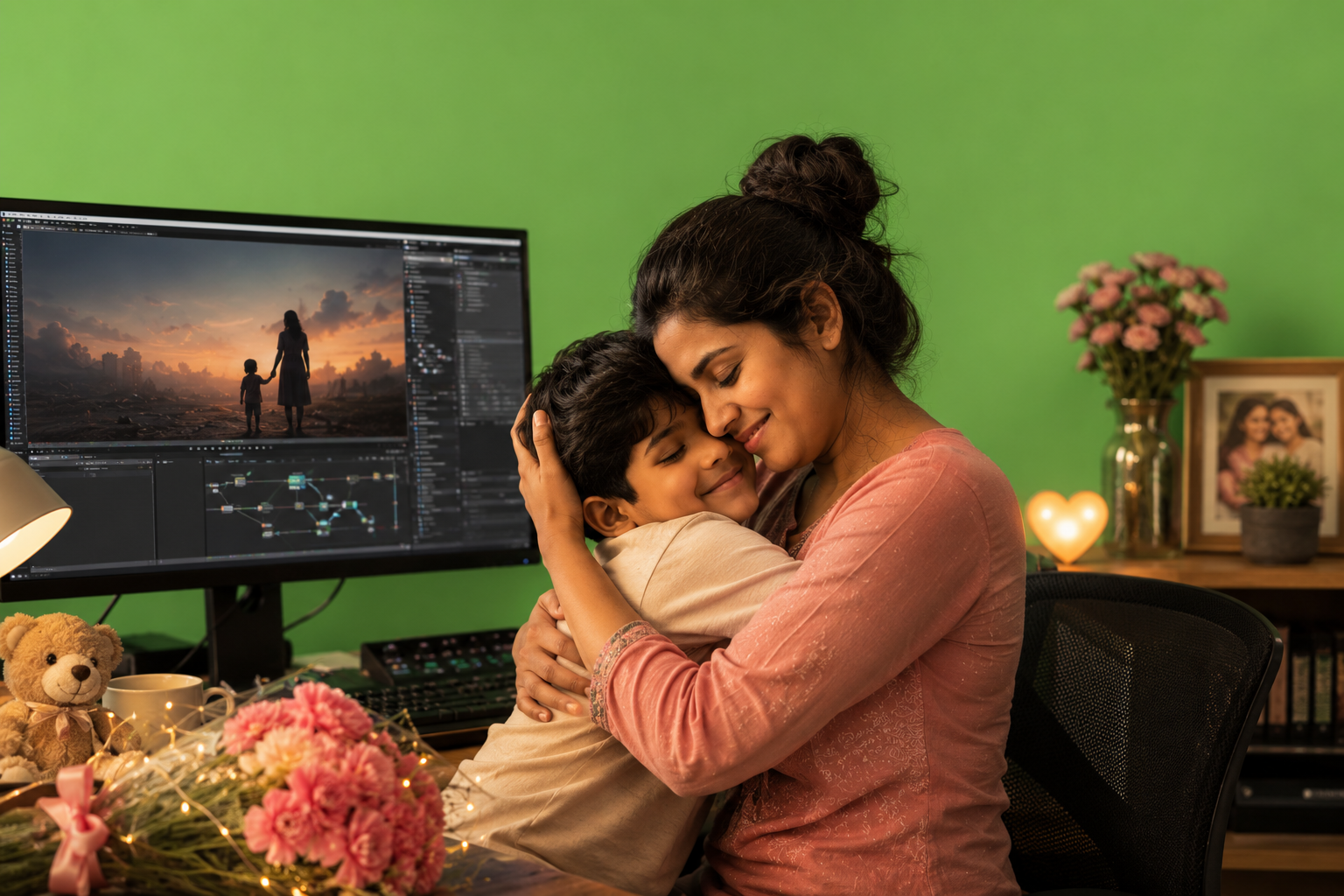
Most people only see the final shot.
The explosion.
The de-aging.
The giant creature.
The Marvel credits rolling at the end of the film.
But behind many VFX artists, there’s usually someone else quietly supporting the journey:
their mother.
Not because she understood compositing, rendering, or rotoscoping.
Most of the time, she didn’t.
She probably thought Nuke sounded like hacking software.
She may still not know the difference between animation and editing.
And after years in the industry, many VFX artists still hear relatives ask:
“So… what exactly do you do?”
Yet somehow, despite never fully understanding the profession, many mothers continued supporting it anyway.
The Strange Reality of Choosing VFX
For many Indian parents, stable careers traditionally meant becoming:
- a doctor
- an engineer
- a government employee
- a bank worker
Not someone fixing green screen edges at midnight.
Fifteen years ago, VFX wasn’t viewed as a serious career path in many households. Even today, people outside the industry often reduce it to:
“Photoshop?”
“Editing?”
“Computer graphics?”
But for many artists, the journey into VFX started the same way:
downloading software,
watching tutorials in low quality,
editing school videos,
trying to recreate Hollywood shots on old laptops.
And during all of that, mothers were often the invisible sponsors of the dream without even realizing it.
They paid the electricity bills.
The internet bills.
Somehow helped buy the computer.
Tolerated sleepless nights and noisy render fans.
Even when they thought it might just be a phase.
The Side of VFX People Don’t See
From the outside, VFX can look glamorous.
People imagine movie premieres, Hollywood credits, and creative work.
But the day-to-day reality is often far less cinematic.
Long hours.
Night shifts.
Client revisions.
Delivery pressure.
Constant deadlines.
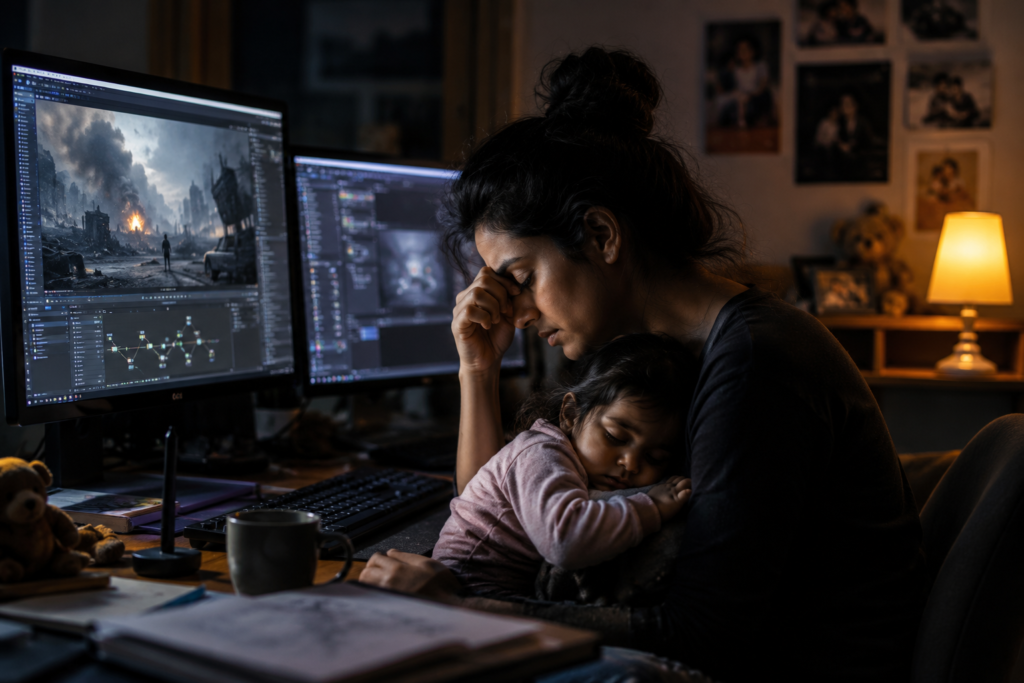
During crunch periods, many artists barely see their families.
Some return home at 2 AM.
Some at sunrise.
The entire house is asleep, except sometimes one person waiting quietly in the kitchen asking:
“Did you eat?”
That small question carries emotional weight many artists understand immediately.
Because VFX can become deeply isolating.
Artists spend hours staring at screens, fixing tiny imperfections audiences will never notice, working on shots that may only appear on screen for two seconds.
Meanwhile, family members slowly adapt to a lifestyle they don’t fully understand.
Mothers may not understand why someone sleeps at 10 AM after a night shift, but they learn to speak softly in the mornings.
They may not understand production deadlines, but they know not to interrupt when someone says:
“Render is running.”
That is support in its purest form.
The Industry Was Built Around Availability
The VFX industry has also become increasingly unstable over the years.
Major studios like Rhythm & Hues and Technicolor Creative Studios have struggled despite contributing to major blockbuster films.
Artists frequently relocate between cities and countries chasing projects and tax incentives.
One year feels stable.
The next year layoffs begin.
And during those moments, many artists return home emotionally exhausted.
For some, family becomes the only stable part of an unstable industry.
But there’s another conversation the industry still avoids discussing enough:
parenthood inside VFX.
In many industries, becoming a parent naturally changes career pace.
In VFX, however, visibility and availability often determine opportunities.
The industry quietly rewards:
- overtime
- staying late
- instant replies
- constant availability
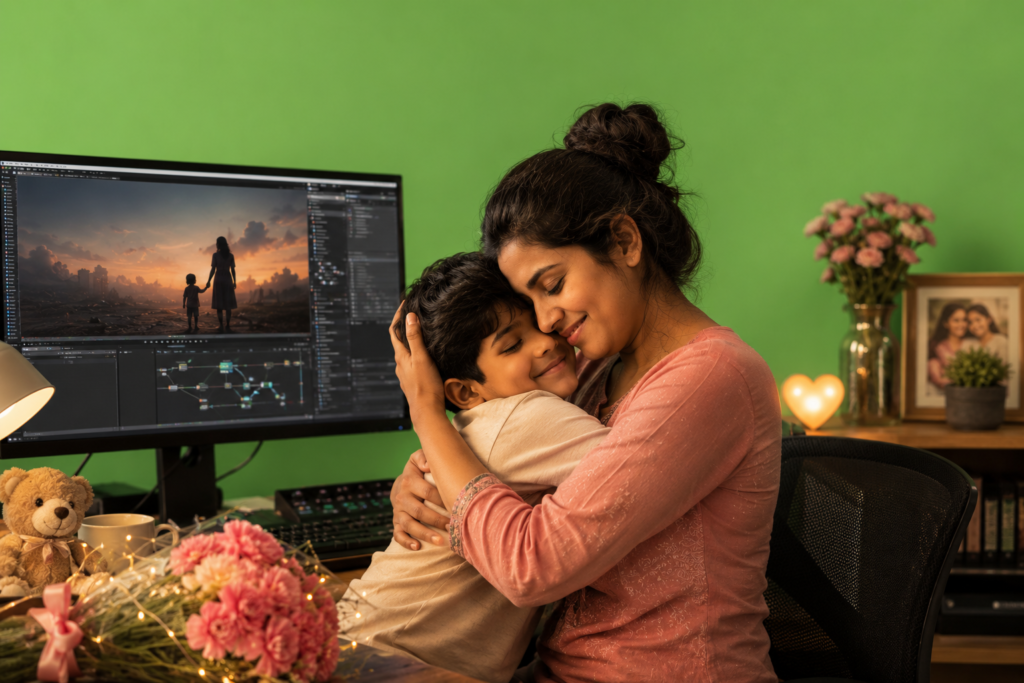
And when artists can no longer maintain that pace because of caregiving responsibilities, the consequences can become subtle but real.
This becomes especially difficult for mothers working in VFX.
The industry still romanticizes burnout culture:
sleeping in studios,
working weekends,
being “always available.”
But sustainable careers cannot depend entirely on sacrificing personal life forever.
The Funny Part Nobody Talks About
Despite all the stress, there’s still something unintentionally funny about explaining VFX to parents.
Many mothers continue introducing their children to relatives in wonderfully vague ways:
“He works in cinema computer.”
Or:
“He does graphics.”
Or the most accurate explanation of all:
“He removes wires from movies.”
Honestly, that last one is technically correct.
A Quiet Kind of Sacrifice
Mother’s Day conversations often focus on emotional speeches and inspirational quotes.
But in creative industries like VFX, support often looks much quieter.
It looks like:
waiting awake at night,
adjusting to impossible schedules,
supporting careers nobody fully understands,
and continuing to believe in someone before the industry believes in them.
Behind many VFX careers, there is usually a mother who sacrificed quietly.
Maybe she never learned the software.
Maybe she still cannot explain the job to relatives.
But she supported the dream anyway.
And for many artists, that support mattered more than anything else.
Happy Mother’s Day to all the mothers supporting artists, editors, animators, compositors, designers, and everyone surviving creative industries.
And if your mother still doesn’t fully understand what you do in VFX…
don’t worry.
Most of ours don’t either.