


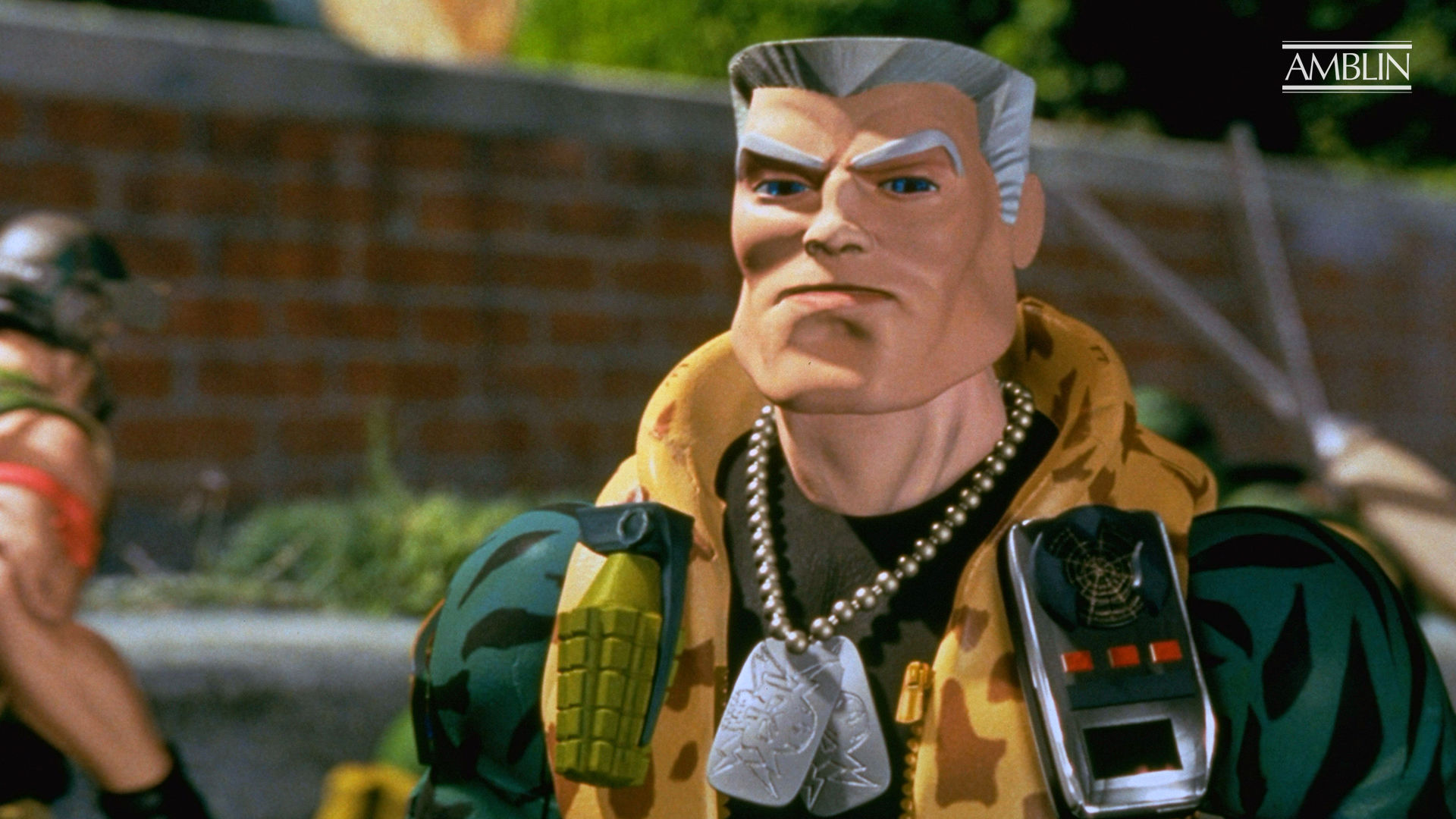
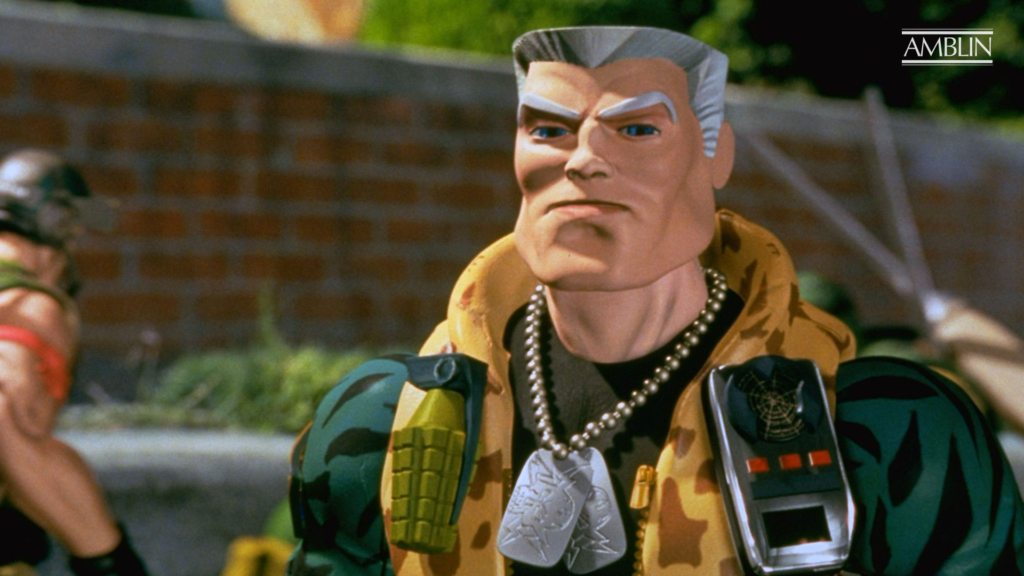
The 1998 film Small Soldiers wasn’t just an action-packed family movie—it was a groundbreaking project in visual effects, blending practical puppetry with cutting-edge CGI. The film’s ambitious approach led to the creation of new scanning tools and software at Industrial Light & Magic (ILM), allowing digital artists to input highly accurate 3D scans of the film’s puppets. This innovation enabled an almost perfect match between the computer-generated and practical versions of the characters, setting a new standard for hybrid effects.
The CG Challenge
Despite its toy-sized heroes, the film’s digital workload was anything but small. The high-resolution 3D scans consumed so much storage that each component of a CG character had to be saved as separate files and reassembled during compositing. Each digital character took nine modelers between three to six weeks to complete, with the most complex, Freakenstein, requiring a full three months.
Beyond characters, ILM artists also had to create over 100 digital props, primarily weapons. Unlike the scanned characters, these props were designed entirely within 3D modeling software, as no physical counterparts existed. The final film featured over 200 CGI shots, seamlessly blended with live-action and practical effects.
The Power of Puppets
While CGI played a crucial role, Small Soldiers heavily relied on practical effects, with over 200 animatronic puppets built by Stan Winston Studios. These puppets represented 14 different characters, the first being Chip Hazard. Originally prototyped at two feet tall, the final version stood one foot tall, with metal joints, a polyurethane body, and a soft silicone head.
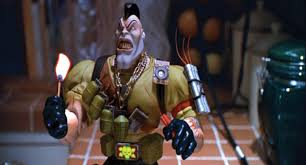
Chip and other puppets were built in three forms:
- Rod-operated versions for close-ups
- Cable-controlled versions for complex movements
- Battery-powered versions for autonomous facial animation
The battery-powered puppets became the primary choice, featuring watch-sized servo motors in their heads for independent facial expressions, while their arms and legs were animated using stop-motion techniques.
The Scale of Production
The sheer number of practical elements made Small Soldiers a massive undertaking:
- 375 pounds of clay were used to sculpt character maquettes
- 400 molds were created during production
- 3,500 feet of electrical wire powered the puppets
- 103 microprocessors controlled animatronics
- 34 radio transmitters and 72 receivers managed puppet movement in large scenes
For a major battle sequence, 186 puppeteers worked simultaneously, coordinating movements across 52 different radio frequencies. At any given time, between 14 to 23 puppeteers operated the characters, supported by a team of 50 artists and technicians dedicated to puppet construction.
A Hybrid VFX Legacy
The combination of CGI and practical effects in Small Soldiers was a technological feat, influencing future VFX-heavy productions. By pushing the limits of scanning, digital modeling, and puppetry, the film became a landmark example of how hybrid filmmaking can create visually stunning and immersive storytelling.