



Comfy UI Updated Again!!
Seriously, How Many Times Is This Now?
That’s 38 official releases of core ComfyUI versions that are documented on the changelog during 2025 from early smaller patch releases (v0.3.40+) up through v0.5.1 in December. This does not count incremental pre-releases or desktop packaging versions, nor separate ComfyUI-Manager or community builds.
At some point, this stops being impressive and starts being exhausting. Right now, using ComfyUI feels like living on a construction site that never shuts down.

You fix one workflow. You save presets. You document steps.
Then you update and suddenly:
- Nodes are missing
- Outputs look different
- Custom nodes fail to load
Most artists are not chasing bleeding edge features every morning. We want stability. They want yesterday’s workflow to open today.
This is the awkward teenage phase of AI tools. Everything moves fast, nobody wants to slow down, and users are expected to keep up or fall behind.
But at some point, ComfyUI needs to decide what it wants to be.
A research playground? Or a production tool?
Why is Computer hardware so expensive now?
The biggest reason is AI.
High end GPUs that used to be made for gamers, creators, and VFX artists are now being swallowed by data centers. Companies like NVIDIA, AMD, and Intel are prioritizing AI accelerators because that is where the money is.
A single AI customer can buy:
- Thousands of GPUs at once
- At higher margins
- With long term contracts
- Compared to that, consumer hardware becomes secondary.
- Ten years ago, gamers drove GPU development.

Now:
- AI training
Cloud rendering - Simulation
- Enterprise compute
Most advanced chips come from a very small number of factories, especially TSMC.
Companies Learned People Will Pay This is the uncomfortable part. During shortages, companies tested higher prices and people still bought hardware and Raw materials, logistics, power, and labor all became more expensive during the pandemic years. Those costs did not roll back.
WAN 2.6 Is Here. And It Is No Longer Open.
WAN 2.6 has been released.
This time, it is commercial.
Is the era of open source WAN models over?
WAN 2.2 was already close to industrial grade quality. Close enough that many people assumed the next step would be an even stronger open release. Instead, WAN 2.6 arrives behind a paywall.
This pattern is familiar.
Free beta testers quietly become paying customers.
It happens every time.

There is also a broader trend at work.
Once a model family starts approaching frontier level competitors, the incentive to release open weights disappears. Open models are useful when catching up. Less useful once you arrive.
Some argue China’s rapid open model releases were strategic. Push fast. Apply pressure. Prevent Western companies from getting too comfortable. But that strategy only works until parity is reached. After that, the economics change. Cloud services win.
WAN feels close to that moment.
Can ML give us editable splines?
For years, machine learning helped with rotoscoping in exactly one way.
It generated alpha mattes.
And most of the time, they were unusable in feature film compositing.
Models like SAMv2 and DINOv3 made segmentation smarter, but the output stayed the same. Pixel masks that break under motion blur, fall apart on edges, and cannot be edited like real roto.
So artists still roto by hand. A new approach changes the question entirely.
This method starts with what ML is already good at. Rough segmentation. Pose estimation. Consistency across frames. Using MediaPipe, it rigs a simple skeletal structure to the subject, then initializes a clean set of Bézier splines that roughly match the silhouette.
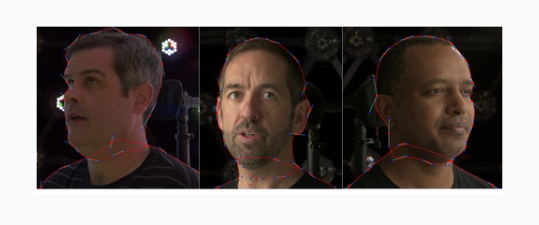
The splines deform frame by frame to match the noisy segmentation output, while staying temporally stable and animator friendly.
The result is not a final roto .It is something better. ML is finally moving from “auto roto preview” to “assistant roto artist.”
And that is the first time it actually fits into a real VFX pipeline.
RotoShop: Automatic Dataset Rotoscoping via Differentiable Splining‘ from Sirak Ghebremusse.
Link : https://dl.acm.org/doi/10.1145/3757376.3771382#sec-4
98th Oscars Reveal Visual Effects Shortlist
The Academy of Motion Picture Arts and Sciences has announced the shortlist of 10 films competing for Best Visual Effects at the 98th Academy Awards, showcasing major work by UK Screen Alliance members.
The shortlisted films are:
- Avatar: Fire and Ash (20th Century Studios)
Industrial Light and Magic - The Electric State (Netflix)
Industrial Light and Magic - F1 (Apple Original Films / Warner Bros.)
Industrial Light and Magic, Framestore - Frankenstein (Netflix)
Industrial Light and Magic - Jurassic World: Rebirth (Universal Pictures)
Industrial Light and Magic, Important Looking Pirates - The Lost Bus (Apple Original Films)
Cinesite, Industrial Light and Magic, Belo FX, Outpost VFX - Sinners (Warner Bros.)
Industrial Light and Magic, Outpost VFX, LIGHT - Superman (DC Studios)
Industrial Light and Magic - Tron: Ares (Walt Disney Pictures)
Industrial Light and Magic - Wicked: For Good (Universal Pictures)
Industrial Light and Magic, Outpost VFX, Framestore

The VFX bake-off presentations will take place on January 10–11, with final nominations set to be announced on Thursday, January 22.
Avatar: Fire and Ash — Quick Note
Short take.
No one doubts the visuals.
The question is not quality.
It is Screenplay and time 3 Hours!!!.

How much effort, how many artists,
and how much invisible labor sits behind a few minutes of spectacle.
Avatar is still the technical north star.
But the industry underneath it is under pressure.